
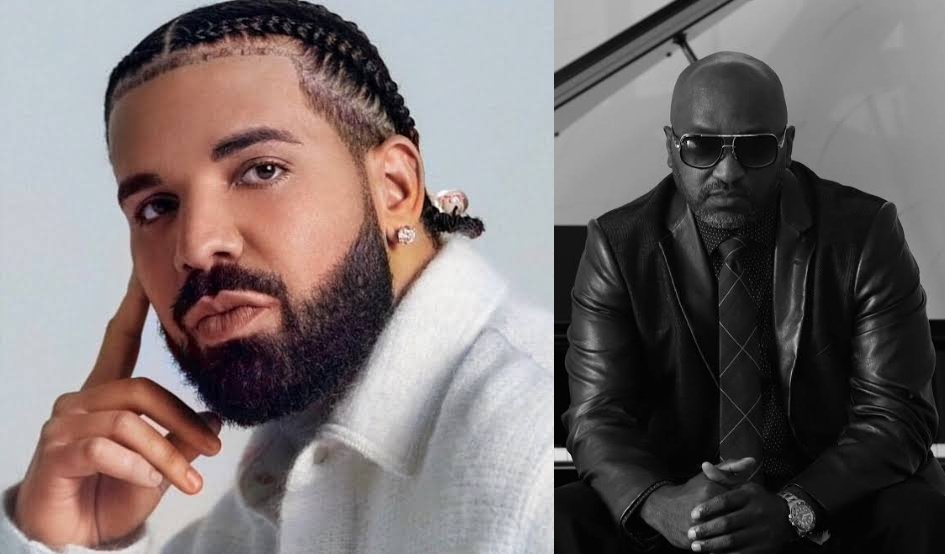
Drake just did it again. On September 16, 2026, during his FOMO short film on YouTube, he previewed a new record with Houston’s own Don Toliver that flips Ella Langley’s “Choosin’ Texas” into an R&B joint. And right there under it, the same guitar that Houston has been riding to since 2005: “Get Throwed.”
That’s the second time Drake has pulled from that record. The first was “N 2 Deep” with Future in 2021. And every single time it happens, the man who built the original beat, Houston producer Mr. Lee, gets paid.
A lot of people, producers included, don’t understand why. So we asked him. Then we did the homework. If you’re new here, catch up on the rest of our music coverage and hip hop news after this one. Here’s the full picture.
First, the record itself
“Get Throwed” came out October 18, 2005 as track three on Bun B’s solo debut, Trill, released through Rap A Lot Records with Asylum Records handling distribution. Produced by Mr. Lee, it put Bun B, Pimp C, Z Ro, Jay Z and Young Jeezy on one song, which was unheard of at the time. Pimp C had just come home, and this was his first video appearance after prison. It was also the first time Jeezy and Pimp C ever linked on a record. Jay Z couldn’t appear in the video because of contract restrictions, so Bun and Pimp carried it.
The numbers back then: “Get Throwed” went to number 24 on Billboard’s Hot Rap Songs chart and number 49 on Hot R&B/Hip Hop Songs. The album Trill debuted at number 6 on the Billboard 200 with 118,000 copies sold in its first week, and it was certified Gold by the RIAA on March 20, 2006. Today “Get Throwed” sits at over 42 million streams on Spotify alone, and it’s still climbing.
Then Drake came for it the first time
September 3, 2021. Certified Lover Boy. Track eight, “N 2 Deep” featuring Future, produced by Harley Arsenault and Kid Masterpiece, built on that “Get Throwed” guitar.
That song peaked at number 12 on the Billboard Hot 100 and number 11 on Hot R&B/Hip Hop Songs. It hit number 14 on the Billboard Global 200 and charted in Canada, Australia, the UK and South Africa. The album did 613,000 units in its first week, the biggest debut of 2021 at that point, and is now certified 3x Platinum.
Now look at the songwriter credits on “N 2 Deep”: Aubrey Graham, Nayvadius Wilburn, Harley Arsenault, Kaushik Barua, Noah Shebib, Alexander Lustig, Noel Cadastre, Bernard Freeman, Chad Butler, Joseph McVey IV, Jay Jenkins, Shawn Carter, and Leroy Williams Jr.
Those last six names? That’s Bun B, Pimp C, Z Ro, Jeezy, Jay Z, and Mr. Lee. Every writer from “Get Throwed” is listed as a writer on the 2021 song. That’s not a courtesy. That’s the business.
Mr. Lee explains it in his own words
We asked Mr. Lee how this works, and he broke it down plain:
“So here’s the breakdown. When you do a record with somebody, especially being a music producer, once the music and the lyrics are put together, that’s called a master. So anybody attached to that gets advances and royalties on that also. So that’s why when you see records that I produced and they get sampled and the songwriters are listed, everybody that was attached to that master in the original song is always listed on the new song as a writer. So that’s pretty much what the breakdown is. And then it depends on the percentages of the song that you have. That’s what determines what your percentages will be on the new song that sampled the record.”
Read that twice if you’re a producer. He’s telling you the whole game in six sentences.
The Breakdown
Every song is actually two separate pieces of property, and they get paid on separately.
The first is the master. That’s the actual recording, the audio file, the thing you hear on Spotify. Whoever paid for and owns that recording controls the master. In the case of “Get Throwed,” that’s Rap A Lot. Pull up the track on Spotify or Apple Music and look at the fine print at the bottom: the ℗ line, which is the sound recording copyright, reads Rap A Lot. On a major or indie label release, that’s usually how it goes. The label owns the master, and the producer negotiates producer points on it, meaning a percentage of what the recording earns, plus an advance up front.
The second is the composition, also called the publishing. That’s the underlying song: the melody, the chords, the lyrics, the beat as a piece of music. This belongs to the writers and their publishers. When you produce a beat, you’re a writer on the composition. Your percentage, your split, gets agreed on and registered.
This is where BMI, ASCAP and SESAC come in. Those performing rights organizations collect performance royalties every time the composition gets played publicly: radio, streaming, TV, clubs, live shows. They pay the writers and publishers based on the registered splits. If your name and your split aren’t registered, that money sits there or goes to someone else. You can look up any song’s registered writers and publishers for free on BMI’s Songview database, which covers both BMI and ASCAP.
So what happens when someone samples you
When Drake’s team wanted that guitar for “N 2 Deep,” they had to clear two things.
They needed a master use license from Rap A Lot, the owner of the “Get Throwed” recording, because they were lifting the actual audio. And they needed a publishing license from the writers and publishers of the composition, because they were using the song itself.
The publishing side is why the credits look the way they do. When you sample a song, the original writers become co-writers on the new song. They get a negotiated percentage of the new song’s publishing. So Mr. Lee, Bun, Pimp, Z Ro, Jeezy and Jay Z all own a slice of “N 2 Deep.”
That’s what Mr. Lee means when he says it depends on the percentages you have. If you owned 25 percent of “Get Throwed,” and the sample deal gives the original writers 50 percent of the new song, you now own 12.5 percent of a Drake record. Every stream, every radio spin, every sync placement on “N 2 Deep” pays the “Get Throwed” writers their piece through your PRO and your publisher. Forever.
The one thing you never get paid on is a sample you never cleared. And the one thing you never get paid on correctly is a split you never registered. Do both.
And now it’s happening again
The new Drake and Don Toliver record hasn’t hit streaming yet as of this writing, but if it comes out the way it was previewed, the same thing happens all over again. “Get Throwed” gets cleared again. Rap A Lot licenses the master again. The original writers land on the credits again. Mr. Lee and everybody attached to the 2005 master get their percentage of a brand new song again.
And this one has serious upside. “Choosin’ Texas” just tied the all time record with 22 weeks at number one on the Billboard Hot 100. A Drake remix of the biggest song in the country, with a Houston artist on it, over a Houston sample, is the kind of record that pays for a long time.
That’s why the whole city was hyped when that guitar came through the speakers in FOMO. Not just because “Get Throwed” is a classic. Because the people who made the classic are eating off it twenty one years later.
The lesson
Mr. Lee is from Pineville, Louisiana, moved to Houston in 1995, got in the door at Rap A Lot, and built records for Scarface, 2Pac, UGK, Paul Wall, Z Ro and Slim Thug. He’s Grammy nominated with nine platinum and six gold albums on his resume. But the thing that keeps paying him in 2026 is a beat he made in 2005, because he kept his name on it.
If you’re a producer reading this: register your songs with your PRO. Get your splits in writing on every record, before it comes out. Know the difference between your master points and your publishing share. Keep track of who owns the recording. Because you never know which beat becomes the one Drake reaches for twice.
Ask Mr. Lee.