
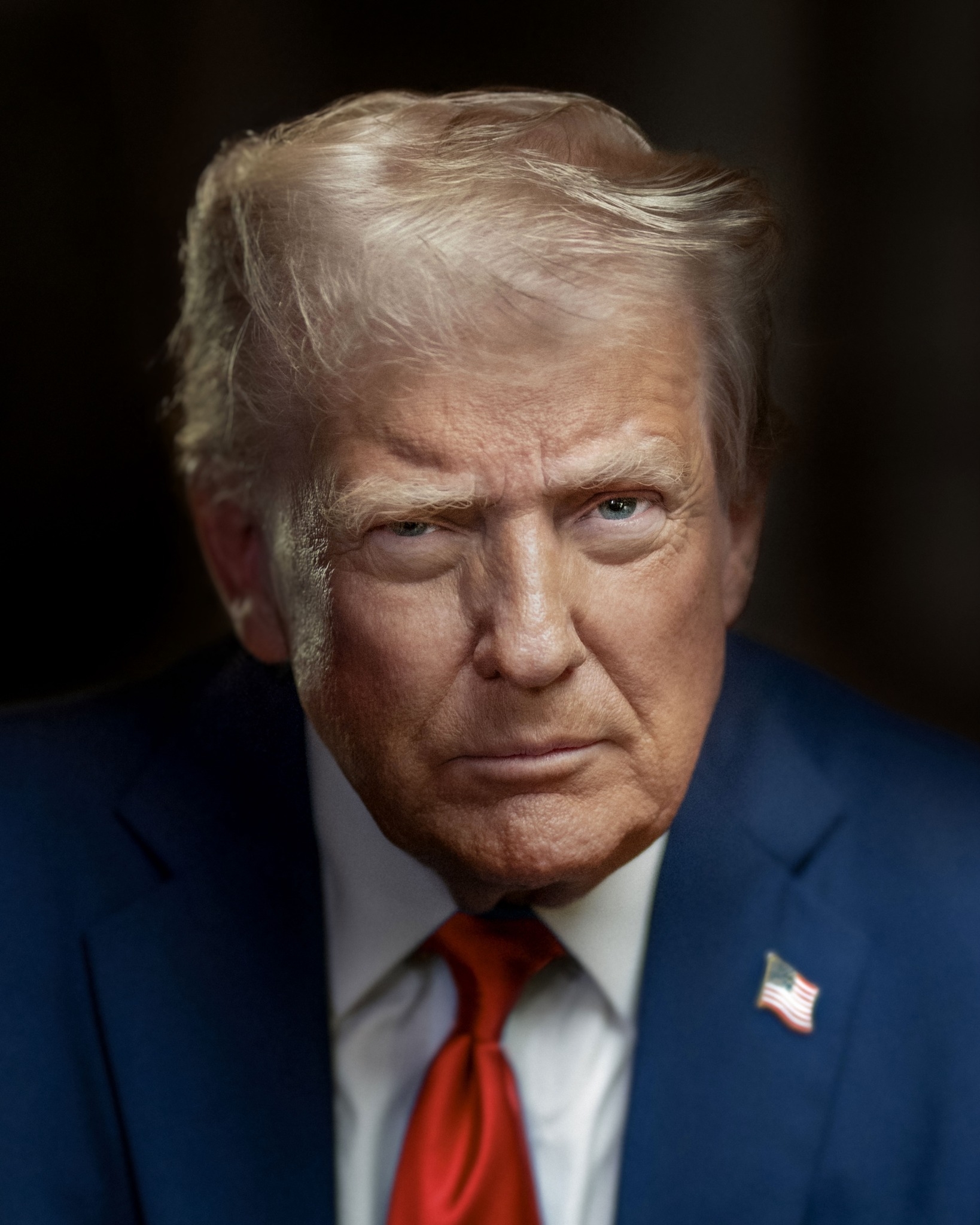
On October 3, Donald Trump posted a video to his Instagram, Truth Social and X accounts with a simple pitch: vote Republican, get paid. If the GOP holds both the House and the Senate in the November 3 midterms, he says every adult citizen in America gets a $5,000 check. He calls it the “Trump dividend.”
View this post on Instagram from @realdonaldtrump
The caption on the post reads, in part:
“If Republicans win the House of Representatives and the Senate in the 2026 Midterm Elections, I’m going to give all adult citizens in the United States of America, $5,000!” (@realdonaldtrump, October 3, 2026)
He doubled down again on October 12 in another video, saying that if Democrats win “you will have an economic depression,” and if Republicans win “you will each have $5,000 in your pocket.” So what is he actually promising, can he even do it, and is it legal to tie money to how people vote? Here is the breakdown in plain English.
Where This Started
Trump first rolled this out on September 9 at the Republican Midterm Convention in Dallas. “If the Republicans win, you win with us and you get $5,000,” he told the crowd, comparing it to a company paying dividends to shareholders. He pointed to the economy and claimed $21 trillion in new investment would cover the cost. The White House has never backed up that $21 trillion figure.
Vice President JD Vance told Fox News some of the money would come from tariffs, and that the checks would target “the American middle class.” That already clashes with Trump’s “all adult citizens” wording. Right now there are no official rules on who would qualify, no income limits, no payment schedule and no bill.
The Math
- Cost: About 245 million U.S. citizens are adults. At $5,000 each, that is roughly $1.2 trillion. The Penn Wharton Budget Model puts it at about $1.35 trillion if every adult got one.
- Tariffs can’t cover it: The Tax Foundation projected tariffs would bring in about $208 billion in 2026. Its economist Erica York said these checks would burn “almost all the revenue that the new tariffs are projected to bring in over a decade.” On top of that, the Supreme Court struck down most of Trump’s tariffs in February, and refunds pushed tariff revenue negative for a stretch.
- The deficit: The U.S. deficit is projected to hit a record $2.1 trillion this fall, and the national debt has grown about $3 trillion over the last 15 months. As one budget watchdog put it, “We don’t have surpluses to give away.”
- Inflation: Economists warn that dumping hundreds of billions of dollars into the economy at once would push prices up. Penn Wharton estimated it could add up to half a percentage point to inflation within a year. In other words, part of that $5,000 could get eaten at the grocery store.
Why a President Can’t Just Cut You a Check
This is the part most people don’t know. A president does not control the government’s checkbook. Congress does.
- The Constitution says so. Article I, Section 9 says “No Money shall be drawn from the Treasury, but in Consequence of Appropriations made by Law.” Translation: every federal dollar spent has to be approved by Congress first.
- It has to pass both chambers. A $5,000 check needs a bill that passes the House and the Senate, then gets signed by the president. That is why Trump tied it to Republicans winning both.
- The Senate is the hard part. Most bills need 60 votes in the Senate to get past a filibuster. Republicans could try a special budget process called reconciliation that only needs 51 votes, but that comes with strict rules and a $1.2 trillion price tag would still have to get through every Republican senator.
- Not every Republican is on board. Rep. Thomas Massie, a Republican from Kentucky, said he was “insulted by the notion that my vote this November could be bought for 5K.” Rep. David Schweikert of Arizona, also a Republican, warned it would drive up interest rates. Ohio Sen. Bernie Moreno is the main backer so far, saying he would file a bill right after the election.
Trump told CBS on September 10 that he didn’t think he needed Congress to approve it. The Constitution says otherwise.
We’ve Heard This Before
This is at least the fourth time Trump has promised Americans a check this term:
- The DOGE dividend (February 2025): Trump and Elon Musk floated checks funded by savings from the Department of Government Efficiency. Musk’s goal was $2 trillion in cuts, which works out to about $5,000 a person. Sound familiar? The checks never came, and the idea faded after Musk left. An August 2026 GAO report found DOGE’s claimed savings were estimates that were “incorrect or unsupported.”
- The tariff dividend (November 2025): Trump promised $2,000 checks from tariff money, with officials pointing to mid 2026. Never sent.
- Healthcare checks (2026): Trump said healthcare money would go “directly to you.” No details, no checks.
- The one that did happen: The $1,776 “Warrior Dividend” for military members went out in December. But the IRS described it as a housing allowance for service members, mostly in lower pay grades, not a check for everybody.
Tax Foundation’s Erica York summed up the new pledge in three words: “Not gonna happen.”
So Isn’t This Bribing People to Vote?
That is the question everybody is asking, and the honest answer is: it feels like it, but it is probably legal. Here is why.
Federal law does ban paying people for their vote. Under 52 U.S.C. § 10307(c), paying or offering to pay someone to vote in a federal election can get you up to five years in prison. Under 18 U.S.C. § 597, offering to make an expenditure to anyone “either to vote or withhold his vote” is also a federal crime.
Former federal prosecutor Glenn Kirschner argues Trump’s pledge could fall under § 597. Rep. Jamie Raskin called it a “political bribe.”
But there is a big Supreme Court case standing in the way. In Brown v. Hartlage (1982), a Kentucky candidate promised voters he would cut his own salary to save taxpayers money. He was sued for violating a law against promising voters anything of value. The Supreme Court ruled 9 to 0 in his favor. The Court drew a clear line:
- Illegal: A private deal with individual voters, like handing someone cash for their vote.
- Protected speech: A public campaign promise of a benefit that comes from public money, needs government approval, goes to everybody, and depends on how the election turns out overall instead of how you personally vote.
Trump’s $5,000 promise checks every box on the protected side. Nobody has to prove who they voted for, the money would come from the Treasury, and Congress would have to approve it. UCLA election law professor Rick Hasen told PBS that Trump “would have a strong First Amendment defense.” Ethics lawyer Richard Painter, who served in the Bush White House, agreed candidates can promise spending, and compared it to George McGovern promising every American $1,000 a year in 1972. McGovern lost 49 states.
So legally, it is a campaign promise, the same category as “I’ll cut your taxes” or “I’ll cancel student debt.” Whether it is a good look for a sitting president to put a dollar amount on your vote is a different question.
The Takeaway
- Trump is promising $5,000 to adult citizens if Republicans win both the House and Senate on November 3.
- He can’t make it happen alone. It needs a bill passed by Congress, and some Republicans are already against it.
- It would cost around $1.2 trillion, more than a decade of projected tariff money, during a record deficit.
- The DOGE dividend and the $2,000 tariff checks were promised the same way and never showed up.
- It is very likely legal under Brown v. Hartlage, because it is a public policy promise, not cash for an individual vote.
Vote however you want. Just don’t spend that $5,000 before it hits your account.